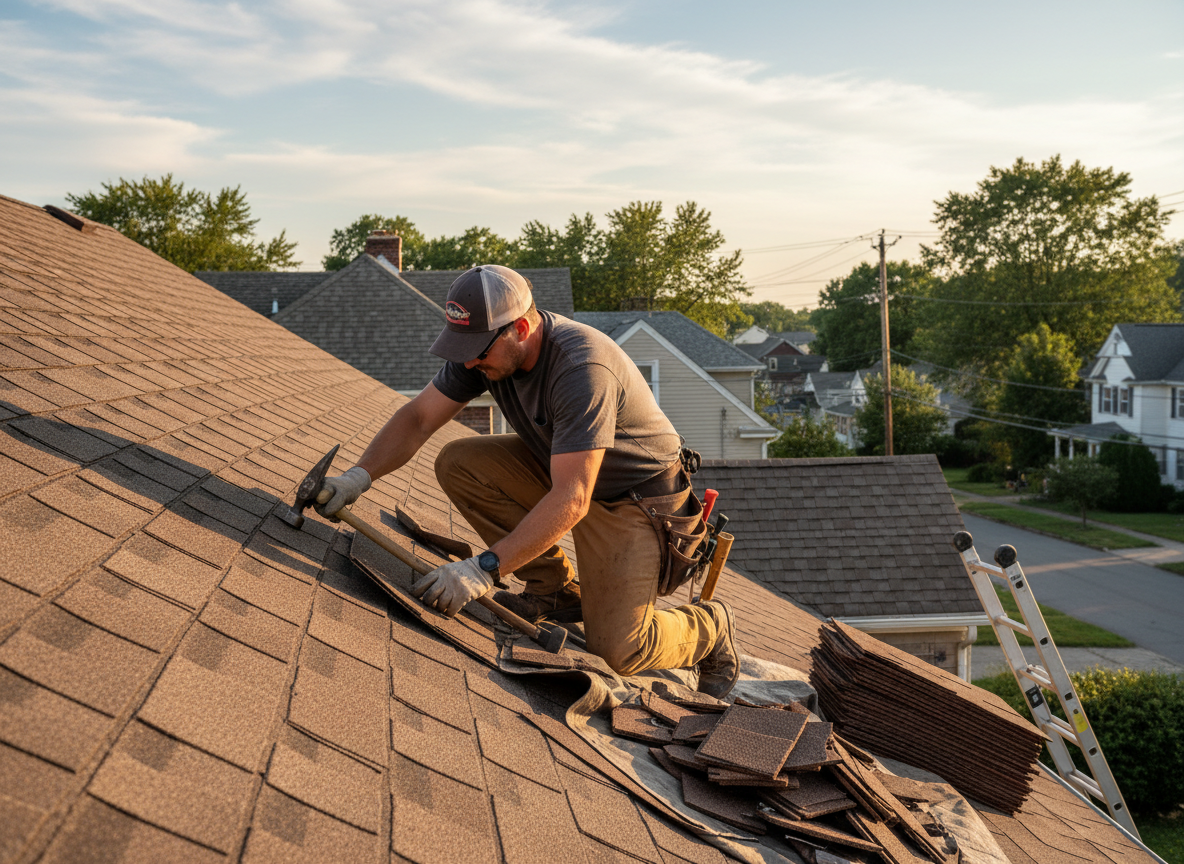
Union homes in the Ryle area and around Union Community Park often feature asphalt shingle roofs on houses built from the 1990s onward. Boone County's rolling terrain directs runoff toward valleys, so even mild winter rains can pool against flashing and lift edges. Humid subtropical conditions keep moisture trapped under lifted shingles longer than in drier climates, turning small wind tears into widespread underlayment rot if left unchecked. Repair crews focus on matching granule texture and color to avoid patchwork that stands out after a season of sun exposure.
When inspecting a shingle roof in Florence or Burlington border zones, technicians check for hail bruising common during spring storms and deteriorated ridge vent seals that allow humid air to rise into the attic. Boone County permitting requires matching existing shingle weight on visible slopes, so crews carry multiple bundles to avoid mid-job mismatches. Edge cases include trees near Union Community Park dropping debris that abrades valleys, and ice dam remnants from rare cold snaps that crack sealant along eaves.
Homeowners in Union often overlook how soil movement on slight slopes shifts roof planes over time, creating nail pops that let humidity reach the deck. TechPatch crews replace individual shingles or larger sections while preserving original underlayment where possible, then apply compatible sealant rated for the area's temperature swings. This approach prevents the common mistake of over-sealing that traps moisture and accelerates deck decay.
Technician insight
In Union, the thing that catches most people out with Shingle roof repair is how the mild winters and persistent humidity let small wind-lifted edges near Ryle homes stay damp for weeks, turning a quick shingle swap into deck replacement if the underlayment isn't checked during the first inspection.
Wind-Damaged Shingles Near Union Community Park
A homeowner in the Ryle neighborhood noticed interior ceiling spots after a spring storm. Inspection revealed several lifted shingles along a valley where debris from nearby trees had collected. The crew replaced the affected section, resealed the valley, and confirmed attic ventilation was still clear. No further water intrusion occurred during subsequent rains.
How it works
- 1
Site Inspection
Walk the roof and attic to map damaged shingles, check flashing, and note ventilation issues tied to local humidity.
- 2
Damage Assessment
Identify whether wind lift, debris, or age-related cracking is the cause and confirm underlayment condition.
- 3
Targeted Replacement
Remove and replace affected shingles, reseal valleys and penetrations, and match existing granule and color.
- 4
Final Seal and Cleanup
Apply compatible sealant, clear debris from gutters, and verify no new leak paths remain.
Pricing
Pricing depends on extent of damage, roof pitch, and material match; upfront quotes are provided after inspection.