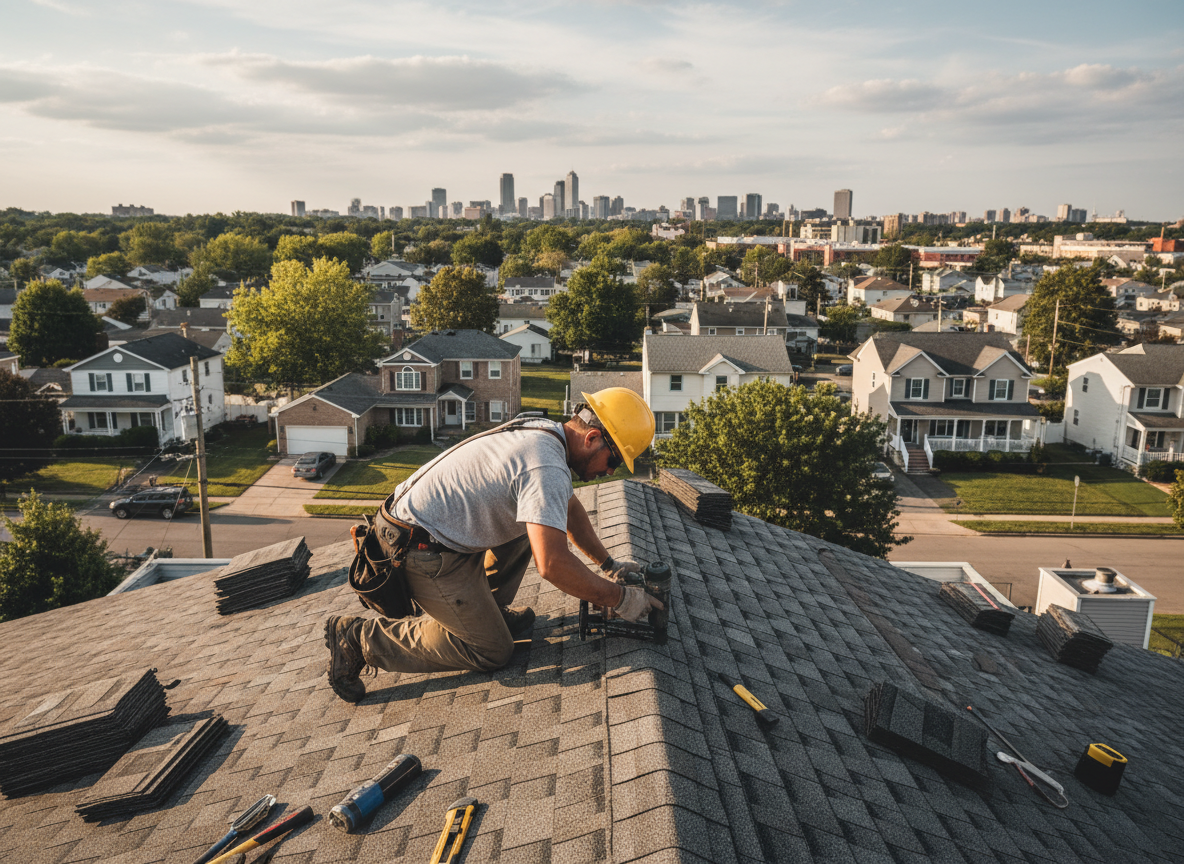
Roof covering in Union requires selecting materials that manage high humidity and occasional freeze-thaw cycles common in Boone County. Asphalt shingles remain popular on homes in the Ryle neighborhood because they shed water efficiently without trapping moisture that can lead to deck rot. Metal panels work well near Union Community Park where tree cover increases leaf debris and shade keeps surfaces damp longer. Proper underlayment and ventilation prevent condensation issues that arise when mild winter days alternate with cooler nights.
Homes built in the 1990s and early 2000s around Cavalry Lane often have truss roofs with limited attic access, making ridge vent installation a key step during covering replacement. In Florence and Burlington, many properties sit on gently sloping lots where runoff from adjacent yards can push water under eaves if flashing is not extended correctly. TechPatch crews at 1597 Cavalry Ln check for these drainage patterns before starting work so the new covering directs water away from foundations rather than toward them.
Boone County permitting requires ice and water shield along eaves and valleys on any roof covering project. Skipping this step leads to leaks when light winter precipitation melts and refreezes under shingles. Crews also verify that existing felt or synthetic underlayment is removed completely on older Union roofs to avoid trapping moisture between layers. This attention to detail keeps the covering performing through the humid summers when attic temperatures rise sharply.
Technician insight
In Union the thing that catches most people out with roof covering is the combination of mild winters and heavy summer humidity on 1990s truss roofs in Ryle. Homeowners often skip full underlayment replacement because winters feel light, then condensation builds under the new shingles during humid months and rots the deck from the inside.
Ryle Roof Covering Replacement
A Union home near Union Community Park showed recurring leaks along the north valley after heavy spring rains. We found compressed felt underlayment trapping moisture against the sheathing from years of humidity. We removed the old covering completely, installed new synthetic underlayment and extended flashing, then applied architectural shingles. The attic now stays drier through both humid summers and mild winter cycles.
How it works
- 1
Site Assessment
Measure the roof, note existing covering type, and check attic ventilation and drainage around the property in Union.
- 2
Material Selection
Recommend shingles or metal panels matched to the home's pitch and exposure to humidity near Ryle or Union Community Park.
- 3
Deck Preparation
Remove old covering, replace damaged sheathing, and install ice and water shield along eaves and valleys per Boone County requirements.
- 4
Covering Installation
Apply new underlayment, flash valleys and penetrations, then install the chosen roof covering with proper nailing patterns.
- 5
Final Inspection
Walk the roof, clear debris, and confirm ventilation and drainage function correctly before leaving the site.
Pricing
Cost depends on roof size, chosen material, and access challenges on Boone County properties.