Union sits in Boone County with many single-family homes built from the 1980s onward in neighborhoods near Ryle and Union Community Park. These roofs see steady rain and humidity that speeds shingle wear and underlayment breakdown, especially on south-facing slopes where afternoon sun hits hardest. Homeowners often notice granule loss in gutters after heavy spring storms that move through Florence and Burlington.
Mild winters in this humid subtropical zone mean less ice dam risk but more frequent freeze-thaw cycles that stress flashing around chimneys and vents. Older homes near Cavalry Lane commonly have 20- to 30-year architectural shingles that reach the end of their service life sooner due to trapped moisture under the deck. Proper ventilation checks during every job prevent premature failure that shows up first in the attic insulation.
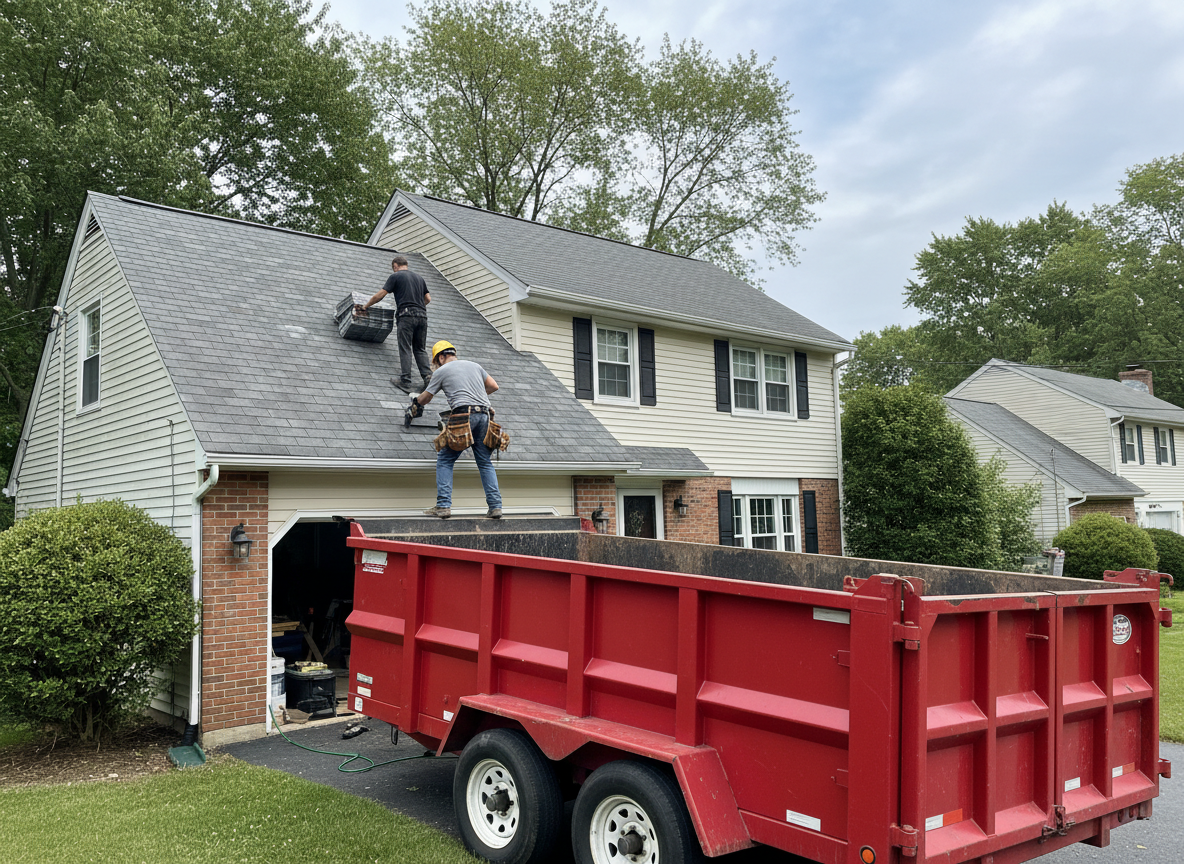
Replacing a roof here usually involves removing multiple layers down to the deck, inspecting for soft spots caused by previous leaks, and installing ice-and-water shield along eaves even without heavy snow. TechPatch works from the 1597 Cavalry Ln address and keeps crews available 24/7 so storm damage can be secured the same day it occurs.
Common Materials and Local Fit
Architectural shingles remain the most requested option because they handle the region's humidity without curling as quickly as three-tab products. Synthetic underlayment adds an extra layer of protection against the frequent afternoon thunderstorms that roll through Union from the southwest.
Technician insight
In Union the thing that catches most people out with Residential Roofing is skipping the ventilation check. Homes near Ryle often have ridge vents blocked by insulation blown in during the 1990s, so even a new roof will trap moisture and rot the deck within five years if the airflow is not fixed at the same time.
Ryle Neighborhood Shingle Replacement
Heavy spring rain had caused leaks along the valley on a two-story home near Union Community Park. We found three layers of old shingles trapping moisture against the deck and blocked soffit vents. We removed everything to the plywood, added synthetic underlayment and proper ridge ventilation, then installed architectural shingles. The attic stayed dry through the next summer's humidity.
How it works
- 1
Initial Assessment
Walk the roof and attic to check deck condition, ventilation, and existing layers while noting any damage near vents or valleys.
- 2
Material Selection
Review shingle options and underlayment choices suited to Boone County humidity and mild winter cycles.
- 3
Deck Preparation
Remove old layers, repair soft spots, and install ice-and-water shield along eaves and around penetrations.
- 4
Installation and Cleanup
Lay new shingles with proper nailing patterns, seal all flashing, then magnet-sweep the property and haul away debris.
Pricing
Upfront written quotes based on roof size, layers, and material choice; final cost depends on deck repairs discovered during tear-off.