2026-10-24 ·
Preventing Attic Heat Buildup During Kentucky Summers
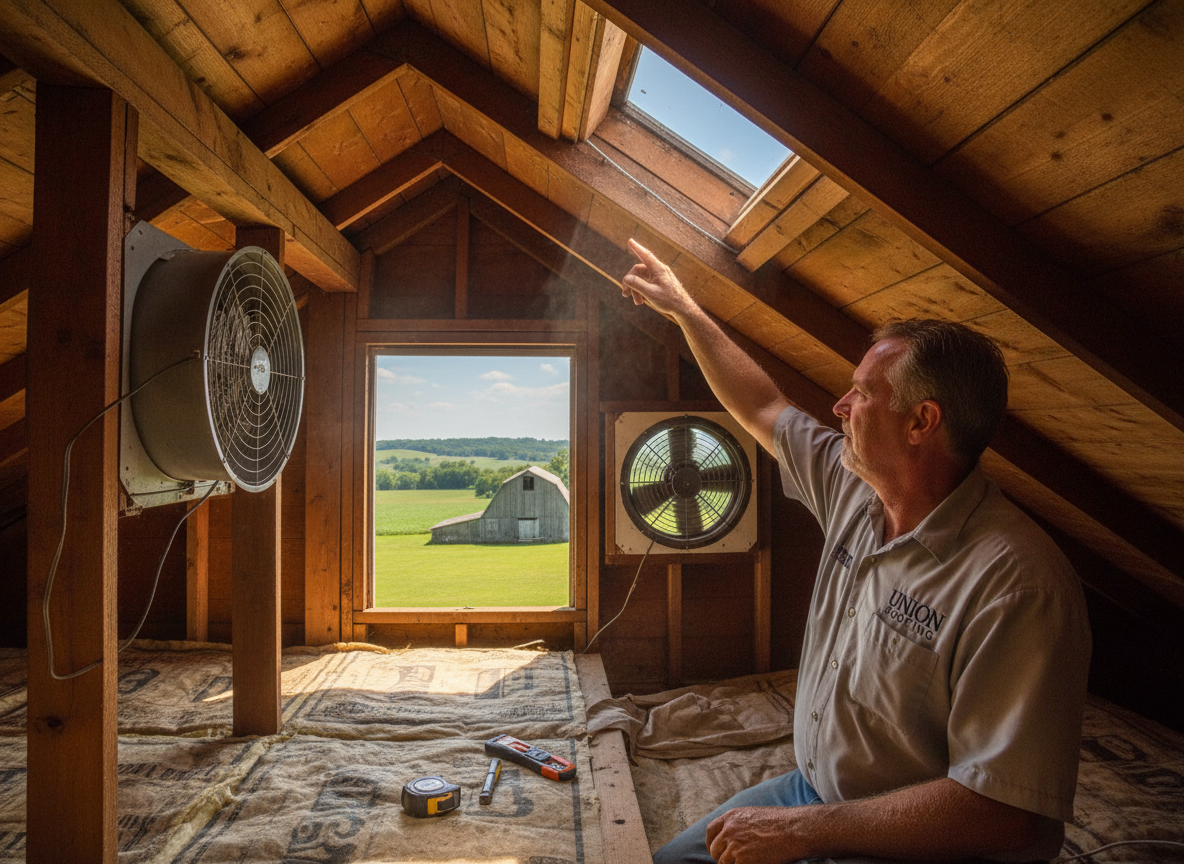
Effective attic ventilation paired with R-38 or higher insulation can drop peak attic temperatures by 20–30°F in Union during July and August. Boone County’s humid subtropical climate brings high humidity and prolonged heat that turns poorly vented attics into ovens, forcing HVAC systems to work harder on homes in Ryle and near Union Community Park. Older housing stock in the area often lacks modern ridge vents or soffit intake, so heat lingers long after sunset.
How Boone County Summers Drive Attic Heat
Union sits in a humid subtropical zone where daytime highs regularly reach 85–90°F with dew points above 70°F. This combination prevents natural cooling at night and traps heat under asphalt shingles common on homes built in the 1990s and early 2000s. Properties near Burlington and Florence experience the same pattern, but Union’s slightly higher elevation can create micro-pockets of trapped air on south-facing slopes. Homeowners notice the difference most in two-story houses where the attic sits directly above bedrooms.
Ventilation Upgrades That Work in Union
Ridge vents paired with continuous soffit intake provide the most reliable airflow for local roofs. A typical 2,000 sq ft Union home needs roughly 4–6 sq ft of net free vent area to meet code. Gable vents alone often fall short on homes with hip roofs common in Ryle subdivisions. Adding turbine or solar-powered vents helps move air on days when natural breeze is absent. These changes also reduce moisture that can degrade roof decking over time.
When planning ventilation work, many residents review What Affects Roof Replacement Costs in Union KY to understand how vent installation integrates with shingle replacement.
Insulation and Radiant Barrier Performance
Blown-in cellulose or fiberglass at R-38 to R-49 levels cuts heat transfer through the ceiling. In older Union homes with 6–8 inches of existing insulation, adding another 10–12 inches often brings performance up to current standards. Radiant barriers stapled under rafters reflect 95% of radiant heat before it reaches the attic floor. This single layer can lower attic temps another 10–15°F when combined with proper venting. Avoid blocking soffit vents during installation to maintain airflow.
When Professional Roof Inspection Helps
A thorough roof inspection reveals blocked soffits, damaged ridge vents, or missing baffles that allow insulation to spill into eaves. In Boone County, inspectors also check for ice dam residue from mild winters that can affect summer ventilation paths. Scheduling an inspection before the hottest months lets homeowners address issues while weather is still mild. See the Spring Roof Inspection Checklist for Northern Kentucky Homes for a seasonal guide that applies year-round.
Homeowners ready to improve attic performance often explore roof installation options that include integrated ventilation and roof inspection services to confirm existing conditions before upgrades begin.